Chronicles of one S/4HANA Implementation
19.02.2026
ALLOY
S/4HANA
 51
51 There is a common belief: SAP is usually slow, expensive, and requires a large team. Yes, it can be slow — but it can also be totally opposite if there is a capable team and a genuine business desire to achieve results. From our own experience, the fastest implementation we have delivered so far took eight months — from the moment we first entered the client’s office to the Go-live. It was an absolutely fascinating project. I remain grateful to Kostiantyn Klymenko, who at the time was the client company’s Chief Accountant. Without him, the project might never have started. In virtually every project, there comes a moment of truth right before launch: key users approach senior management with the claim that if the new system starts tomorrow, there will be a disaster, because nothing is ready, nothing works, and everything should be stopped immediately. At that point, the leader must make a decision: whether to trust the implementation team or the users. Kostiantyn listened carefully to both sides and made the decisive call: “We are launching.” We, the implementation team, had no doubt the system would work — and it did. But the decision was his, and thanks to it, everything moved forward.
The Beginning
On 1 February 2018, the three of us joined the company to implement SAP ECC. That was the entire team at the time. The project manager began actively searching the market for SAP experts. Inside the company, there was already a support group maintaining existing accounting systems based on 1C — four specialists with strong knowledge of business processes and the 1C products. They were willing to learn new technologies and we formed a cohort of seven. Incidentally, when a company uses 1C, it usually means several separate systems built on different 1C solutions: one for accounting, another for budgeting, and perhaps dozens more — sometimes integrated, at other times not. Understanding end-to-end processes across these systems is rarely easy and straightforward. So, we began analysing business processes and gradually introducing the 1C support team to SAP. In effect, this resembled a Discover phase, although at the time we were not yet familiar with the SAP Activate methodology, introduced alongside the first SAP S/4HANA release in 2015, combining the Waterfall and Agile approaches.
Assembling a team may sound simple, but in reality, it is not at all. In fact, during an intensive SAP implementation, it is as difficult as forming an Olympic squad. The first two months were devoted to recruitment — we needed more than ten specialists across different functional areas. In April, we learned that SAP ECC would no longer be available. For new installations, the only option was SAP S/4HANA version 1709. Nowadays, everyone knows what it is and has little fear of uncertainty about it, but then we had only rumours like bits of information — it was considered something entirely new and unfamiliar. There were few implementations worldwide, and no experts were available in Ukraine. So, we had no choice: we would implement SAP S/4HANA. Frankly, this was daunting — we did not fully understand the system, nor how to install it, nor how it would behave. Besides, it required specialised hardware with at least 196 GB of memory for more than ten users, column-store databases, and a radically redesigned financial architecture. But it was exciting — and we took the challenge of implementing SAP S/4HANA!
The Project Scope
The functional scope was substantial — 10 modules:
- FI — Financial accounting, banks, clients, and related matters
- FI-AA — Asset accounting
- FI-TV — Business Travel management
- CO — Controlling
- MM — Materials management and procurement
- SD — Sales and distribution
- PM — Plant maintenance
- PS — Project systems
- HCM — Human capital management (initially limited scope)
- PSM — Budget management
- BC — Basis
- BI-BO — Analytics
- ABAP — Interfaces with other systems – a key task to ensure a coherent and cohesive IT ecosystem
By April, we secure a server and begin installation. By this time, the team already has experts in accounting, sales, logistics and, to some extent, TORO. We are still looking for people to work with budgeting and personnel management in terms of business travel management and personnel registration numbers.
By late April, we hold the Kick-off meeting where the launch of the SAP implementation project is formally announced.
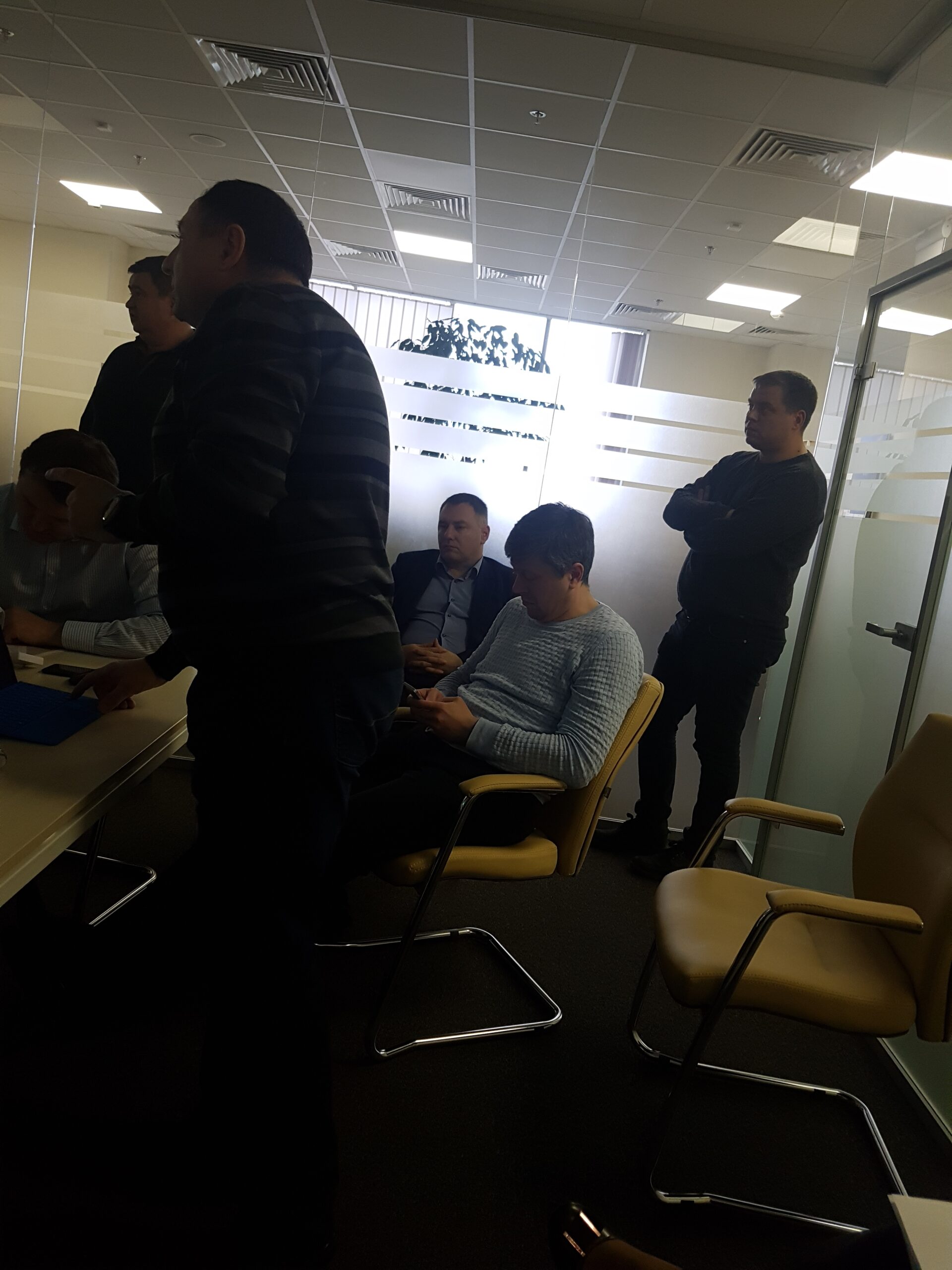 I think it was April 25, 2018. | 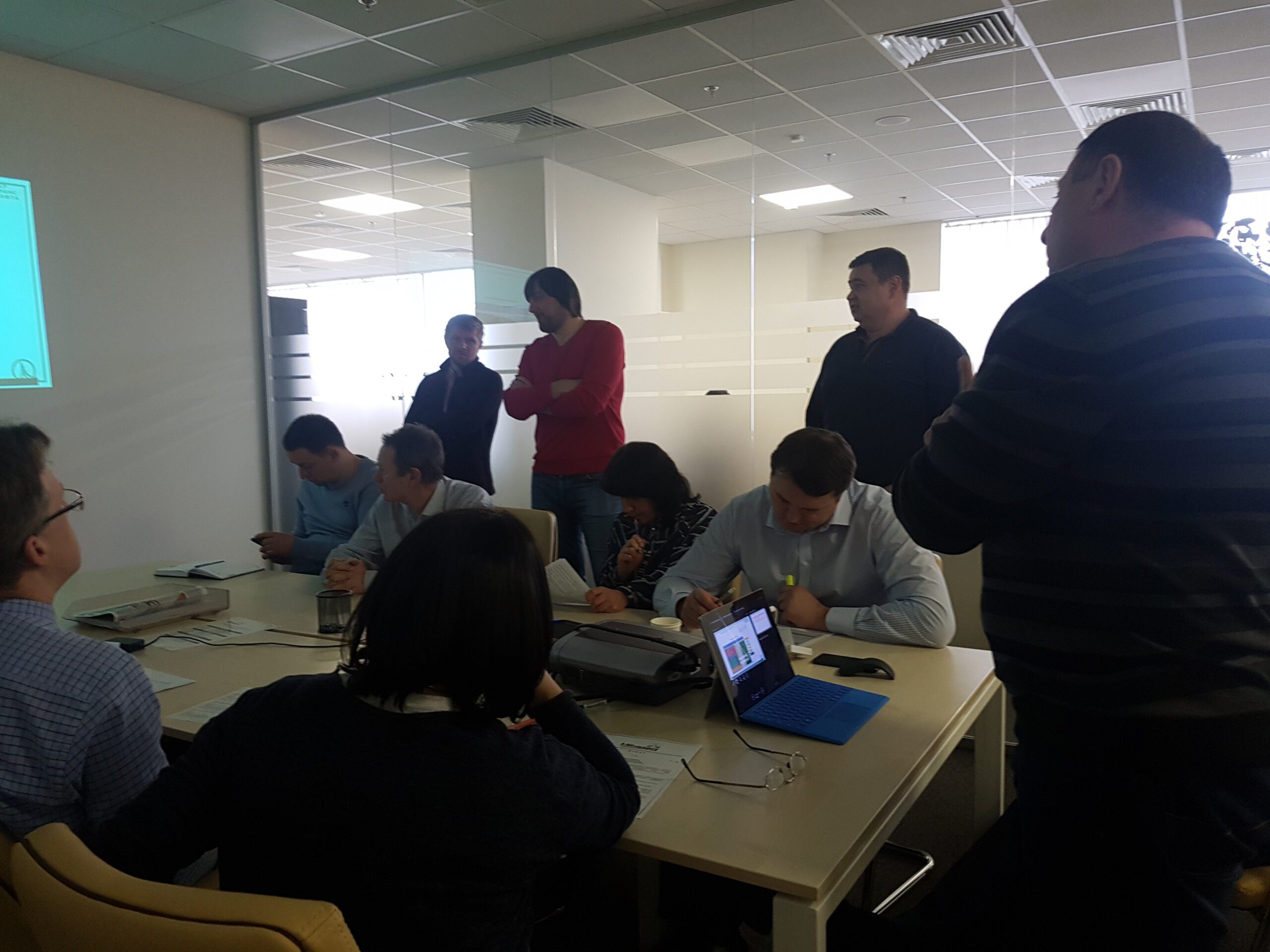 |
May – SAP S/4HANA 1709 is rolled out at the beginning of the month. We can find a super guru for business travel and personnel management tasks. We seem to have contact information for a budgeting specialist, but he can only start work sometime in late June or early July. Well, we’ll wait, but in the meantime, there’s work to be done.
The holiday season in May – half a month of celebrations, during which PM tries to draw up the project charter, and the team tries to understand what S/4HANA 1709 is and how to “cook” it. At the end of May, we are subtly nudged by the management, ‘Let’s try and launch something before the full start; we really want to see quick wins, even if they are not significant.’ So, we decide to launch the management of organisational units and master data in SAP by 1 July, thereby killing two birds with one stone: we get quick results and prepare the master data for loading, which in itself is a rather complex and potentially painful process. In other words, on 1 July, we launch a productive server on which the company’s organisational structure is configured and master data such as master material records and business partners are entered. From 1 July, such data will only be maintained in the SAP system, after which this data will be replicated in the 1C systems via automatic interfaces. In the 1C systems, the maintenance of material and business partner directories will be closed. Everything will go through SAP. We have one ABAP developer for the entire team – consultants are equipped with varying levels of ABAP knowledge – so he deals with interfaces and everything else. We are preparing for the initial upload of basic data, so we are studying Migration Cockpit as a new interface to replace the LSMW transaction. As a result, on 25 June, we launch production, upload everything we need, and the first productive instance of SAP S/4HANA in Ukraine is launched. At that time, there are two users in the system who are responsible for the main data scope. The team continues to work, but we understand that we are already limited by the launched system. If we made a mistake somewhere in the foundation of this building, then the further we go, the more problematic the entire structure will be.
Three months before the full launch
July – a budgeting consultant lands; the team is fully assembled. The deadline is October, which is only three months from now. Sometime in mid-September, we discover that one of the company branches has a full-fledged housing and utilities department: there are apartment buildings on the balance sheet — a heavy legacy of the USSR, a social function, and so there is also 1C, which issues invoices and keeps records, and it also needs to be replaced. So, in a week or a week and a half, a sales specialist sets up an analogue of housing and communal services with printing of bills for services rendered.
1 October marks the start of what is often referred to as trial industrial operation. In fact, this is the work of users in two productive systems in parallel — 1C and SAP — with reconciliation of results. But payments come from one system — and that is SAP. Users have a double workload, as does the implementation team, because the systems have different approaches to accounting, and explaining the differences between the systems is quite a challenge.
On the last Friday of September, on the eve of the new system, all users take every precaution possible — all critical operations are completed so that the stressful Monday would pass without any additional incidents. But something urgent and unexpected always happens — so we do everything necessary and everything works perfectly.
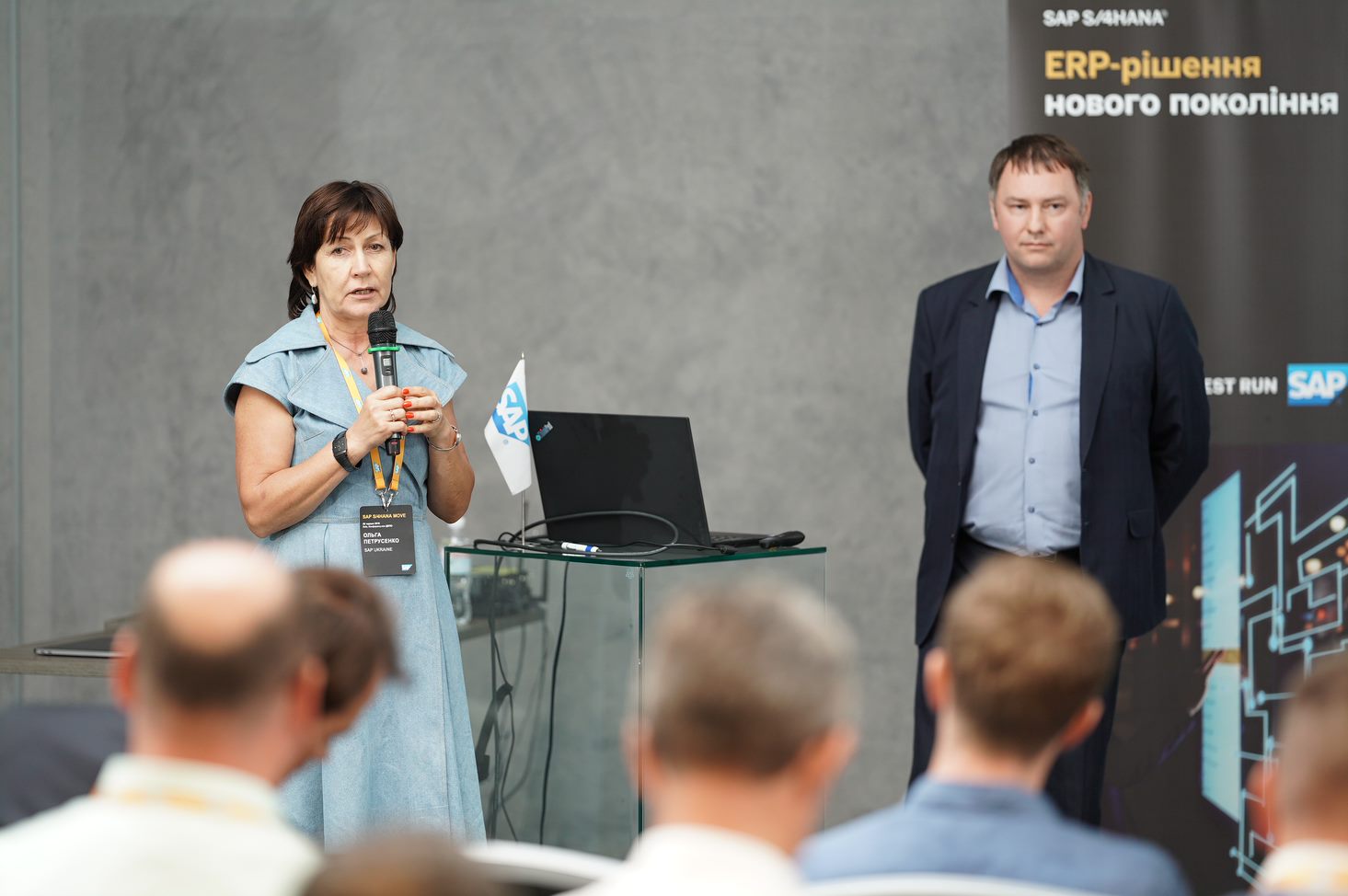
And yes, the first implementation and launch of SAP S/4HANA version 1709 in Ukraine took place on 1 October 2018. At that time, it was the first working SAP S/4HANA system in Ukraine. Then, there was the SAP forum in Kyiv dedicated to new-generation ERP solutions, where Kostiantyn Klymenko, as the company’s Chief Accountant, gave a presentation. But that was in June 2019, and by that time we had already implemented SAP S/4HANA in another company that was engaged in the retail sale of compressed gas and had a network of 81 filling stations. And that, of course, is another story. At the forum, we were told that no one believed in our success, given the complexity and highly regulated environment of the company. On the contrary, we were confident in our abilities, had incredible support from the company’s management, and felt the power of trust of the people. And we succeeded!
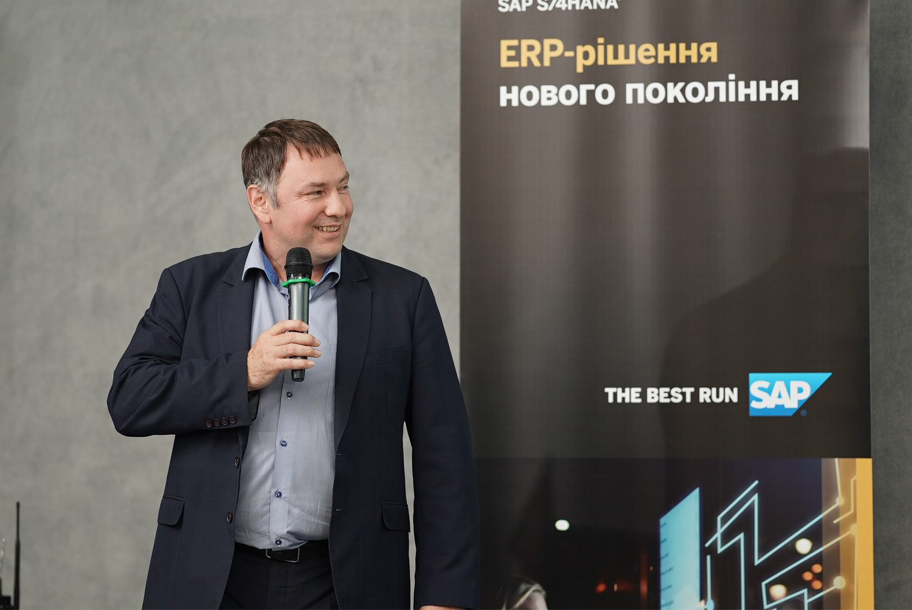
Only one of the two survives – the Stronger one
1 January 2019. Maintaining records in parallel systems — 1C and SAP S/4HANA — is quite a daunting task, users are completely exhausted, as is the implementation team. Moreover, on the one hand, the differences between the systems are increasingly significant due to different approaches to accounting implementation. On the other hand, after three months of operation, users have become convinced that the new system works well and they just need to get used to living and working in a new way. Therefore, starting in 2019, the 1C systems will be shut down and archived, leaving only SAP, everyone will breathe a sigh of relief, and a new era will begin.